What Are Perps in Crypto? Perpetual Contracts Explained

Last Updated: July 15, 2026
What are perps in crypto? Perpetual contracts — often called perps — are a type of derivative that lets you speculate on the price of Bitcoin, Ethereum, or other digital assets without actually owning them. Unlike traditional futures contracts, perps have no expiry date. You can hold a position for as long as you want, provided you maintain enough margin and manage the funding rate that periodically balances the market. Traders use perps for leveraged exposure: you can control a large position with a fraction of the capital, amplifying both potential gains and losses. The mechanism that keeps a perp's price tied to the spot market is a recurring payment between longs and shorts, which makes these contracts self-regulating and liquid around the clock. If you're exploring crypto derivatives or considering leveraged trading strategies, understanding how perpetual contracts work — and their risks — will help you decide when and how to use them effectively.
Perps vs futures comparison
| Feature | Perpetual | Futures | Spot |
|---|---|---|---|
| Expiry date | None — hold indefinitely as long as margin is sufficient and funding is paid or received | Fixed settlement date (weekly, monthly, quarterly) when the contract closes and profit/loss is realized | None — you own the asset outright and can hold as long as you choose |
| Price anchor | Funding rate every 8 hours keeps the contract price close to the underlying spot index | Convergence to spot at expiry; basis (premium or discount) narrows as settlement approaches | Direct market price determined by supply and demand on the exchange order book |
| Leverage | Typically 1x to 125x depending on the exchange, asset, and account tier; higher leverage increases liquidation risk | Usually 1x to 50x; leverage varies by contract and exchange; quarterly futures often have lower maximum leverage | 1x only — you pay the full price upfront and own the asset without borrowing or margin |
How perpetual contracts work
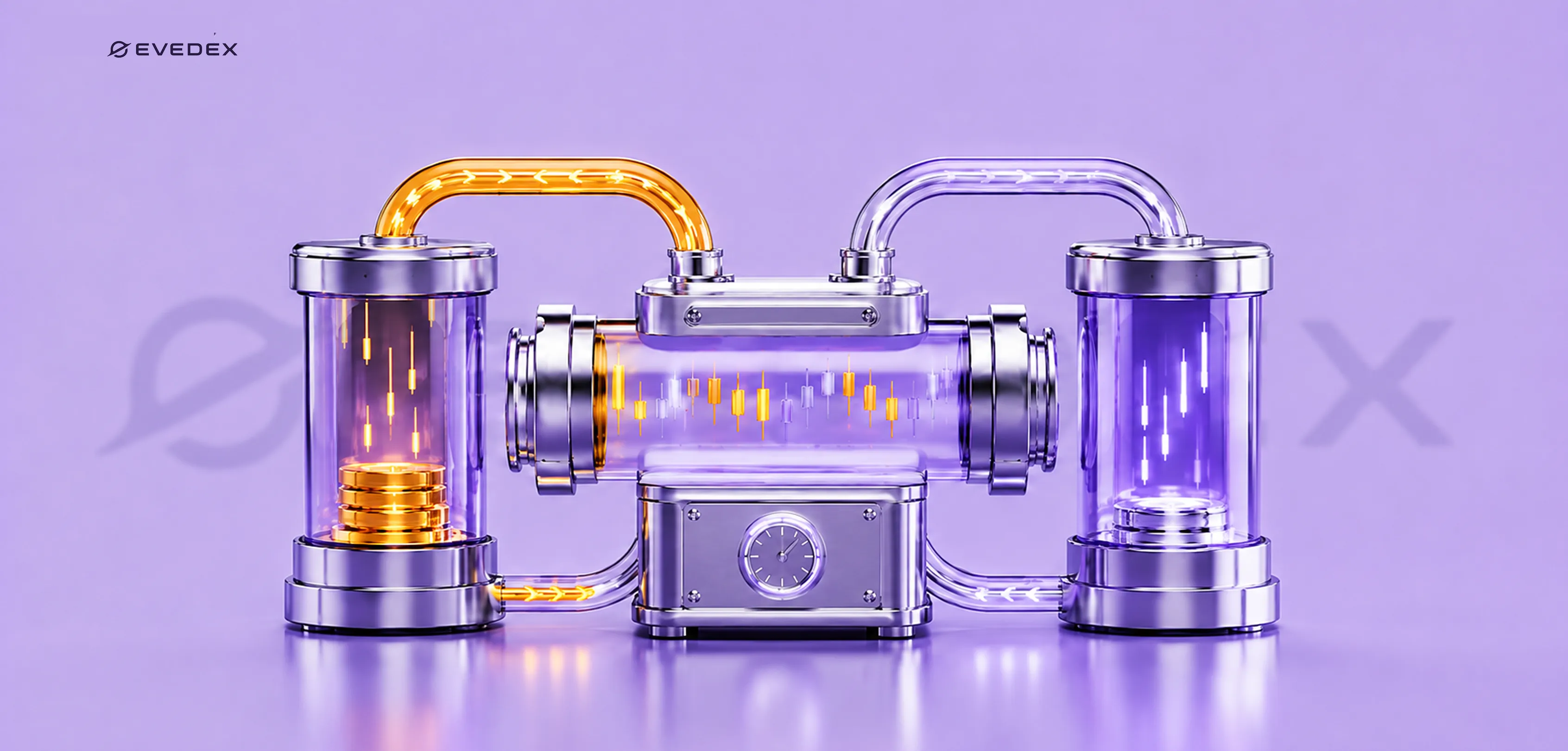
A perpetual contract mirrors the spot price of an asset through a funding rate mechanism. Every few hours — typically every 8 — the funding rate is calculated based on the difference between the perp price (called the mark price) and the spot index. When the perp trades above spot, traders holding long positions pay a small fee to those holding shorts. When it trades below, shorts pay longs. This continuous exchange of payments incentivizes arbitrageurs to bring the contract price back in line with the underlying market. You post initial margin to open a position and must maintain a maintenance margin level; if your account equity falls below that threshold due to adverse price movement, the exchange will liquidate your position to prevent negative balances. Leverage multiplies both profit and risk: a 10x long on Bitcoin means a 1% price drop costs you 10% of your margin. Most exchanges use an isolated or cross margin model, and understanding which you've chosen is critical before opening a leveraged trade.
Six reasons traders use perps
Perps offer flexibility and capital efficiency that make them popular with active traders.
- No expiry rollover You never have to close and reopen a position just because a contract is expiring — useful for longer-term directional bets or hedging strategies.
- Capital efficiency Leverage lets you control a large position with a smaller capital outlay, freeing funds for other trades or strategies.
- 24/7 liquidity Crypto perps trade around the clock with deep order books on major pairs, so you can enter or exit at any time.
- Short exposure You can profit from falling prices without borrowing the underlying asset — just open a short position on the perp.
- Hedging spot holdings If you hold Bitcoin or Ethereum in spot and expect short-term volatility, a short perp position can offset downside risk without selling your holdings.
- Arbitrage opportunities Price discrepancies between perps and spot, or across different exchanges, can be captured by traders with the speed and capital to act quickly.
Perps are particularly useful in volatile markets where quick position adjustments matter. If you're planning a hedging strategy, perps let you protect spot holdings without liquidating them. And because funding rates can turn positive or negative, some traders hold positions specifically to collect funding — though this requires constant monitoring and low leverage to avoid liquidation during sudden moves.
Funding rates can add up. If you hold a long position and pay 0.01% every 8 hours, that's roughly 1% per month — a cost that eats into profit if the market stays flat. Always check the current and historical funding rates on the exchange before opening a position, and factor them into your breakeven calculation.
Trading perps on EVEDEX
EVEDEX is a crypto exchange built for traders who want straightforward access to perpetual contracts across major pairs. The platform supports leverage up to 100x on Bitcoin and Ethereum perps, with transparent funding rates updated every 8 hours and displayed directly on the order interface. You can choose isolated margin to limit risk to a single position, or cross margin to share collateral across all open trades. The engine handles high-frequency order flow without lag, and the liquidation engine uses a partial liquidation model to preserve as much of your position as possible when margin runs low. Visit EVEDEX perps trading to open your first position with as little as $10 in collateral.