NEAR Protocol: Scalable Blockchain for Decentralized Apps

Last Updated: July 2, 2026
NEAR Protocol has carved out a distinct position in the race to build scalable, user-friendly blockchain infrastructure. Launched in 2020 by former Google engineers, NEAR tackles the scalability trilemma—balancing decentralization, security, and throughput—through Nightshade sharding, a unique approach that splits the network into parallel processing units. Unlike monolithic chains that bog down under heavy traffic, NEAR's architecture scales horizontally, supporting thousands of transactions per second at a fraction of Ethereum's gas fees. The protocol's human-readable account names (think alice.near instead of 0x7a3f…) and progressive onboarding lower friction for new users, while staking rewards and a growing DeFi ecosystem attract long-term holders. Traders watch NEAR for its volatility and correlation with broader Layer 1 sentiment, particularly as ecosystem milestones—Aurora EVM launches, major dApp migrations, DAO treasury activity—drive short-term price swings. If you're evaluating cryptocurrency exchanges or comparing staking platforms for passive income, understanding NEAR's technical edge and market dynamics will help you decide whether it fits your portfolio strategy and risk tolerance.
Protocol comparison matrix
| Protocol | Consensus | Throughput | Fees |
|---|---|---|---|
| NEAR | Nightshade sharding with Proof-of-Stake; validators rotate across shards to prevent collusion while maintaining decentralization | Target 100,000 TPS after full sharding rollout; currently processes ~2,000 TPS on mainnet with sub-second finality | Under $0.01 per transaction; gas refunds return 30% of fees to contract developers, subsidizing dApp economics |
| Ethereum | Proof-of-Stake post-Merge; relies on Layer 2 rollups (Arbitrum, Optimism) for scalability rather than native sharding | 15-30 TPS on Layer 1; rollups push to 4,000+ TPS but add withdrawal delays and bridge complexity | $1-$15 during peak congestion; EIP-4844 cuts L2 fees but L1 remains expensive for direct settlement |
| Solana | Proof-of-History with Tower BFT; trades decentralization (fewer validators can keep pace) for raw speed and low latency | 65,000 TPS theoretical; real-world sustained throughput ~3,000 TPS before network degradation under spam attacks | $0.00025 median; flash-loan bots and MEV activity occasionally spike fees to $0.05-$0.10 in high-frequency windows |
How Nightshade sharding scales throughput
NEAR's Nightshade design partitions the blockchain into multiple shards, each processing its own set of transactions and smart contracts in parallel. Validators are assigned to specific shards on a rotating basis, and the protocol generates a single block that aggregates state changes from all shards—hence the name "Nightshade," where individual shard blocks cast a unified "shadow" onto the main chain. This differs from Ethereum's eventual sharding plan, which will separate data availability from execution; NEAR merges both within each shard while maintaining cross-shard communication through receipts, asynchronous messages that move assets or call functions across shards. The system's economic security comes from slashing penalties: validators who sign conflicting blocks or go offline lose a portion of their staked NEAR, deterring attacks even as the network scales to hundreds of shards. For developers, this means dApps can tap NEAR's full throughput without migrating to a separate Layer 2 or worrying about bridge exploits. Users benefit from consistent sub-second finality and predictable fees, regardless of how many shards are live. The World Economic Forum's blockchain deployment toolkit highlights sharded architectures as a key enabler for enterprise adoption, and NEAR's production track record—no major outages since mainnet launch—demonstrates that sharding can work at scale when incentive design and validator rotation are properly balanced.
Six factors that move NEAR's market price
Before entering a position, map out the catalysts that historically trigger volatility in NEAR's trading pairs.
- Sharding phase rollouts NEAR's roadmap includes Simple Nightshade (live), Chunk-Only Producers (Q3 2026), and full sharding (2027). Each phase announcement tends to spark a 15-30% rally as throughput projections rise and developers commit to building on the expanded capacity.
- Aurora TVL growth Aurora, NEAR's EVM layer, mirrors Ethereum's tooling while offering NEAR's speed. When Aurora's total value locked crosses psychological milestones ($500M, $1B), NEAR typically sees inflows as traders anticipate fee revenue sharing and increased token utility.
- Validator set expansion A growing validator count signals decentralization and network health. NEAR crossed 100 active validators in early 2025; each cohort of 20-30 new validators correlates with a 5-10% price uptick as staking APY stabilizes and smaller holders delegate tokens.
- Major dApp launches High-profile projects—NFT marketplaces, gaming platforms, social protocols—drive user adoption. Sweatcoin's migration to NEAR in 2023 brought 60M users; similar launches in 2026 (rumored gaming studios, creator DAOs) could repeat that demand shock.
- Interoperability bridges Rainbow Bridge enables Ethereum ↔ NEAR transfers; partnerships with Cosmos IBC or Polkadot's XCM would unlock cross-chain liquidity. Bridge TVL growth (currently ~$120M) often precedes NEAR rallies as arbitrage bots and yield farmers move capital.
- Macro crypto sentiment NEAR's beta to Bitcoin hovers around 1.2, meaning a 10% BTC move typically drives a 12% NEAR swing. During altcoin seasons (Q1 and Q4 historically), NEAR outperforms BTC by 20-40% as retail rotates into Layer 1 narratives.
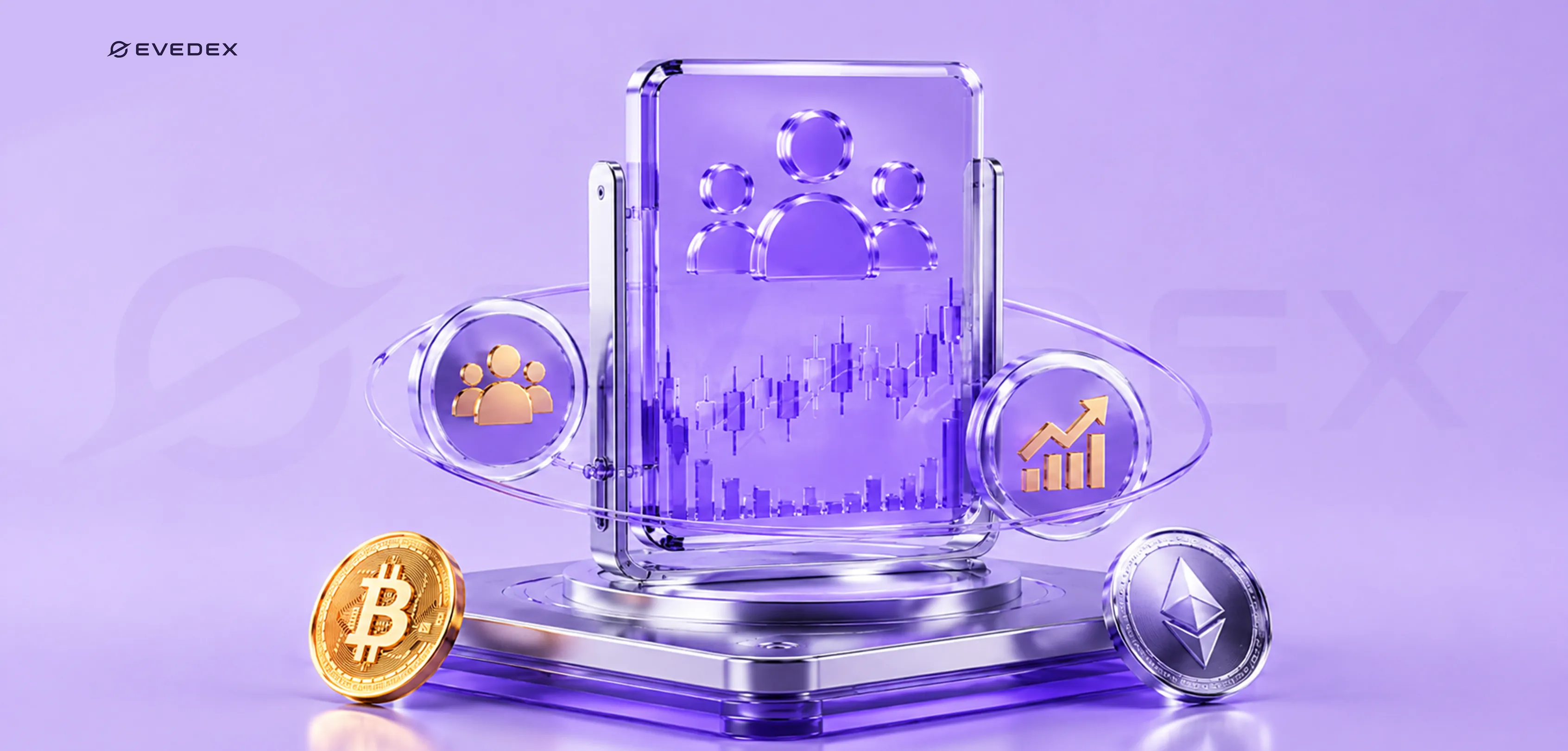
For an in-depth comparison of blockchain scalability solutions, our guide breaks down trade-offs between sharding, rollups, and sidechains across major protocols. The image above illustrates how parallel shard execution reduces congestion; in practice, this means your swap on Ref Finance settles in 1-2 seconds even when Ethereum's mempool is clogged, a tangible advantage for arbitrage and DeFi strategies. The NEAR Foundation's transparency reports publish quarterly metrics on transaction volume, active accounts, and developer grant disbursements—data points that savvy traders parse for early signals of ecosystem acceleration before price catches up.
Trading and holding NEAR on EVEDEX
EVEDEX supports NEAR/USDT and NEAR/BTC pairs with tight spreads and deep liquidity, making it easy to enter or exit positions during volatile sessions. Traders can set limit orders to accumulate NEAR below key support levels—historically $2.80, $3.50, and $4.20—or deploy stop-loss triggers to lock in profits after parabolic moves that follow major announcements. The platform's portfolio analytics surface your NEAR allocation in real time, tracking unrealized gains against your average entry price and flagging when rebalancing makes sense. If you're staking elsewhere, EVEDEX's transaction history export integrates seamlessly with tax software, ensuring you capture both trading P&L and staking rewards in a single CSV. The mobile app pushes alerts when NEAR crosses custom price thresholds, so you never miss a breakout tied to a Phase 2 sharding upgrade or an Aurora ecosystem partnership.