DEX Blockchain: How Decentralized Exchanges Work

Last Updated: July 21, 2026
A dex blockchain is the infrastructure that enables decentralized exchanges to operate without intermediaries. Unlike centralized platforms where a company holds your assets, DEX blockchain protocols use smart contracts to execute trades directly between users. Every transaction happens on-chain, giving you full control over your funds through self-custody wallets. The technology relies on automated market makers (AMMs) and liquidity pools to price assets and facilitate swaps, removing the need for order books or middlemen. Understanding how DEX blockchain systems work helps you evaluate trade-offs between control, cost, and liquidity. Explore DEX trading options if you want to compare platforms, or review blockchain security fundamentals for safer trading. After reading, you'll know how transactions execute on-chain, what risks come with smart contract reliance, and when a DEX blockchain suits your trading needs better than a centralized alternative.
DEX Blockchain Feature Comparison
| Platform | Blockchain | Mechanism | Advantage |
|---|---|---|---|
| Uniswap | Ethereum, Polygon, Arbitrum, and several EVM-compatible chains with deep liquidity for major pairs | Constant product AMM with multiple fee tiers and concentrated liquidity options for providers | Highest liquidity across EVM chains, battle-tested contracts, extensive token support, and wide wallet integration |
| PancakeSwap | BNB Smart Chain with lower transaction fees and faster confirmation times than Ethereum mainnet | AMM pools plus yield farming, staking, and lottery features for liquidity providers and traders | Extremely low fees, rapid transaction finality, large user base, and gamified incentives for engagement |
| dYdX | StarkEx Layer 2 with off-chain order matching and on-chain settlement for reduced gas costs | Hybrid order book model with margin trading, perpetual contracts, and advanced order types for experienced users | Derivatives trading, leverage up to 20x, professional tools, low latency, and capital efficiency for active traders |
How DEX Blockchain Protocols Execute Trades
DEX blockchain systems replace centralized order matching with smart contracts that hold and route funds according to pre-programmed rules. When you initiate a swap, your wallet signs a transaction that interacts with the contract. The contract checks the liquidity pool's reserves, calculates the output amount using an AMM formula (typically x × y = k), and transfers tokens directly to your address. No company processes the order or holds your assets during the swap. Gas fees pay for the computational work miners or validators perform to include your transaction in a block. Because everything happens on-chain, anyone can audit the contract code, verify liquidity, and see transaction history. This transparency builds trust but also exposes your trading activity to anyone monitoring the blockchain. Learn more about blockchain consensus mechanisms to understand how transactions get validated, and check how to choose a crypto wallet for secure self-custody options that work with DEX platforms.
Six Key Factors in DEX Blockchain Trading
Each factor below affects cost, speed, or control when trading on decentralized protocols.
- Gas fees Networks charge fees for every transaction; Ethereum mainnet can cost $50+ during congestion, while Layer 2 solutions or alternative chains charge under $1 per swap.
- Slippage tolerance Large trades against small liquidity pools move prices significantly; setting a slippage limit protects you from unfavorable execution but may cause transaction failures.
- Liquidity depth Pairs with shallow liquidity produce worse prices; check pool size and trading volume before swapping less common tokens to avoid excessive price impact.
- Smart contract audits Unaudited protocols carry exploit risk; stick to DEXs with public audits from reputable firms like Trail of Bits or OpenZeppelin before committing large amounts.
- Token approval limits Most DEXs request unlimited spend approval for convenience; revoke unnecessary approvals regularly to limit damage if a contract is compromised later.
- Impermanent loss Providing liquidity exposes you to divergence loss if token prices move; calculate potential loss versus fee earnings before depositing into AMM pools.
DEX blockchain platforms give you control but shift responsibility entirely to you. There's no customer support to reverse a mistaken transaction or recover funds sent to the wrong address. Read about DeFi risk management to understand common mistakes and how to avoid them. Monitoring gas prices with tools like Etherscan's Gas Tracker helps you time transactions for lower fees, and using hardware wallets adds a layer of protection against phishing attacks targeting DEX users.
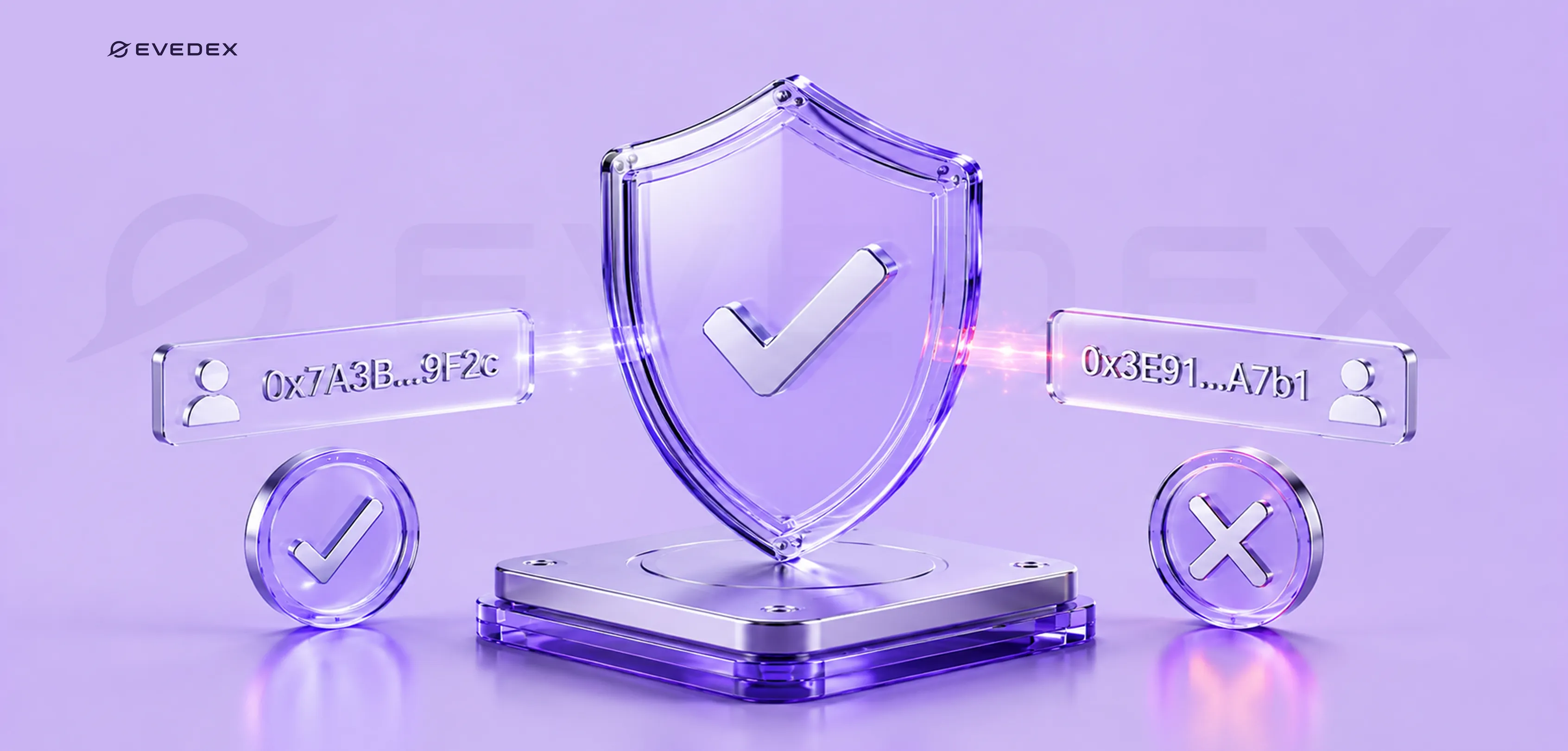
The image above shows how smart contracts validate and execute swaps without human intervention. Every step—from checking balances to updating pool reserves—happens automatically once your transaction reaches the blockchain.
Trade Crypto on a DEX Blockchain with EVEDEX
EVEDEX connects you to multiple DEX blockchain protocols through a single interface that aggregates liquidity across Ethereum, Polygon, and BNB Chain. The platform routes your trade through the pool offering the best price, splitting orders across multiple DEXs when it reduces slippage. You connect your wallet once, approve tokens as needed, and execute swaps without creating an account or completing KYC. Real-time gas estimates show you the total transaction cost before confirmation, and the interface highlights high-slippage warnings for illiquid pairs. EVEDEX doesn't hold your funds or private keys—transactions go directly from your wallet to the smart contract. Compare DEX features and fees to see how aggregation saves you money on large trades and improves execution quality.